Monday, April 20, 2009


An engineer from IIT, now a farmer
An Inspirational story …
An engineer from IIT, now a farmer
This is an inspiring story.It helps you dare to think beyond the usual..It shows how single minded dedication and focused work can help one beget the dreams.One who helps himself,the devinity reaches out to help them.Read on.
Off-beat is in. The oft beaten track, not so.
One of the most interesting themes at this year's Pan-IIT event was the session on rural transformation. IITians who have chosen an offbeat career hogged the limelight at the event. In this series, we feature some of the IITians who preferred to be different, rather than get into a corporate rat race.
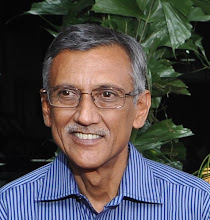
The star at the event was R Madhavan, an alumnus of IIT-Madras. This is Madhavan's success story as a farmer
Passion for agriculture
I had a passion for agriculture even when I was young. I don't know how my love for agriculture started. I only know that I have always been a nature lover.
I used to have a garden even when I was a teenager. So, from a home garden, a kitchen garden, I gradually became a farmer! My mother used to be very happy with the vegetables I grew.
Studying at IIT-Madras
My family was against my ambition of becoming an agriculturist. So, I had to find a livelihood for myself.
I wrote IIT-JEE and got selected to study at the Indian Institute of Technology, Madras. I enjoyed studying mechanical engineering.
My intention was to transform what I study into what I love; mechanisation of farming. I felt the drudgery in farming is much more than in any other industry, and no one had looked into it.
Working for ONGC after IIT
I started my career at the Oil and Natural Gas Corporation (ONGC). My father refused to give me any money to start farming. So I asked the officials to let me work at the offshore sites, on the rigs.
The advantage was that I could work on rigs for 14 days and then take 14 days off. I chose to work on the rigs for nine years, uninterrupted.
My first farm land
Madhavan's farm.
After 4 years, I saved enough money to buy six acres of land. I bought land at Chengelpet near Chennai.
I chose that land because the plot had access to road and water. Back in 1989, a man in a pair of trousers aroused curiosity among the farming community. That was not the image of a farmer!
Tough beginning as a farmer
I became a full fledged farmer in 1993. It was tough in the beginning. Nobody taught me how to farm. There was no guidance from the gram sevaks or the University of Agriculture.
I ran from pillar to post but couldn't find a single scientist who could help me. I burnt my fingers. My first crop was paddy and I produced 2 tonnes from the six acres of land, it was pathetic.
When I lost all my money, my father said I was stupid. I told him, it didn't matter as I was learning. It was trial and error for me for three years. Until 1997, I was only experimenting by mingling various systems.
Going to Israel to learn
In 1996, I visited Israel because I had heard that they are the best in water technology. Take the case of corn: they harvest 7 tonnes per acre whereas we produce less than a tonne.
They harvest up to 200 tonnes of tomatoes, whereas here it is 6 tonnes, in similar area of land.. I stayed in one of the kibbutz, which is a co-operative farm for 15 days.
I understood what we do is quite primitive. It was an eye opener for me. They treat each plant as an industry. A plant producing one kilo of capsicum is an industry that has 1 kilo output.
I learnt from them that we abuse water. Drip irrigation is not only for saving water but it enhances your plant productivity. We commonly practice flood irrigation where they just pump water. As per the 2005 statistics, instead of 1 litre, we use 750 litres of water.
Dr Lakshmanan, my guru
I met Dr Lakshmanan, a California-based NRI, who has been farming for the last 35 years on 50-60,000 acres of land.
He taught me farming over the last one decade. Whatever little I have learnt, it is thanks to him.
I knew a farm would give me much better returns in terms of money as well as happiness. Working for money and working for happiness are different. I work and get happiness. What more do you need?
No guidance in India
I said at one platform that we have to change the curriculum of the agricultural universities. What they teach the students is not how to farm, but how to draw loans from a bank!
What they learn cannot be transformed to reality or to the villages. The problem in the villages is not mentioned in the university. There is a wide gap and it is getting worse.
Making profits
After burning my fingers for four years, from 1997 onwards, I started making profits.
Even though it took me four years, I did not lose hope. I knew this was my path ven though I didn't have any guidance from anyone.
In those days, communication was slow. Today, I can get guidance from Dr Lakshmanan on Skype or Google Talk, or through e-mail.
I send him the picture of my problem and ask his guidance. In those days, it took time to communicate. There was no Internet or connectivity.
That was why it took me four years to learn farming. Today, I would not have taken more than six months or even less to learn the trick!
The farming cycle
I started crop rotation after 1997. In August, I start with paddy and it is harvested in December.
I plant vegetables in December itself and get the crops in February. After that, it is oil seeds like sesame and groundnut, which are drought-resistant, till May.
During May, I go on trips to learn more about the craft. I come back in June-July and start preparations on the land to get ready for August. In 1999, I bought another four acres. My target is a net income of Rs 100,000 per annum per acre. I have achieved up to Rs 50,000.
Selling the products
I sell my produce on my own. I have a jeep and bring what I produce to my house and sell from there. People know that I sell at home. I don't go through any middle man.
I take paddy to the mill, hull it and sell it on my own. In the future, I have plans to have a mill too. These days, people tell me in advance that they need rice from me. I have no problem selling my produce.
Engineering helps in farming
More than any other education, engineering helps in farming because toiling in the soil is only 20 per cent of the work. About 80 per cent of farming needs engineering skills.
Science is a must for any farming. I have developed a number of simple, farmer-friendly tools for farming areas like seeding, weeding, etc. as we don't have any tools for small farmers.
If I have 200 acres of land, I can go for food processing, etc. My next project is to lease land from the small farmers for agriculture. The village will prosper with food processing industries coming there. My yield will also be more with more land.
Abdul Kalam visits the farm
Dr Abdul Kalam visited my farm when he was the President, after hearing about what I was doing. He spent around two hours on my farm.
During his visit, he said: "We need not one, but one million Madhavans!"
If I am able to inspire or create even one entrepreneur, I will be very happy, because that is what Dr Kalam wished me to do.
Experimental farming
Every acre of my land has ten cents of experimental farming. I have done this for the last 15 years..
This is a part of my research and development. Some of it may fail, but even if I succeed at one thing, that is enough for me.
Entrepreneurship in the village
I feel that the number of people engaged only in farming should come down. Instead of ten people, there should only be two people. I am not saying the eight should go jobless.
What we should do is, create employment in the villages based on other agro activities like value addition, processing, etc.
We can go for mechanisation in large areas so that the cost per acre goes down.. In India, the cost per every meal is very high. So, my next concern is, how do you make it cheap.
In America, the unskilled working for one hour can earn three meals a day. Here, in the rural areas, even if they work for one day, they can't get one meal a day. How do you bring down the cost? By producing more food. So, my intention is to make more food.
Food insecurity in India
The United Nations says 65 per cent of the world population suffers from food deficiency, and India ranks first in the list.
About 49 per cent of our children are undernourished. This means our future generation will be affected.
If we are not going to give attention to this area, we are in for real trouble. Food insecurity is more threatening than an atom bomb!
FWD MAIL
An engineer from IIT, now a farmer
This is an inspiring story.It helps you dare to think beyond the usual..It shows how single minded dedication and focused work can help one beget the dreams.One who helps himself,the devinity reaches out to help them.Read on.
Off-beat is in. The oft beaten track, not so.
One of the most interesting themes at this year's Pan-IIT event was the session on rural transformation. IITians who have chosen an offbeat career hogged the limelight at the event. In this series, we feature some of the IITians who preferred to be different, rather than get into a corporate rat race.
The star at the event was R Madhavan, an alumnus of IIT-Madras. This is Madhavan's success story as a farmer
Passion for agriculture
I had a passion for agriculture even when I was young. I don't know how my love for agriculture started. I only know that I have always been a nature lover.
I used to have a garden even when I was a teenager. So, from a home garden, a kitchen garden, I gradually became a farmer! My mother used to be very happy with the vegetables I grew.
Studying at IIT-Madras
My family was against my ambition of becoming an agriculturist. So, I had to find a livelihood for myself.
I wrote IIT-JEE and got selected to study at the Indian Institute of Technology, Madras. I enjoyed studying mechanical engineering.
My intention was to transform what I study into what I love; mechanisation of farming. I felt the drudgery in farming is much more than in any other industry, and no one had looked into it.
Working for ONGC after IIT
I started my career at the Oil and Natural Gas Corporation (ONGC). My father refused to give me any money to start farming. So I asked the officials to let me work at the offshore sites, on the rigs.
The advantage was that I could work on rigs for 14 days and then take 14 days off. I chose to work on the rigs for nine years, uninterrupted.
My first farm land
Madhavan's farm.
After 4 years, I saved enough money to buy six acres of land. I bought land at Chengelpet near Chennai.
I chose that land because the plot had access to road and water. Back in 1989, a man in a pair of trousers aroused curiosity among the farming community. That was not the image of a farmer!
Tough beginning as a farmer
I became a full fledged farmer in 1993. It was tough in the beginning. Nobody taught me how to farm. There was no guidance from the gram sevaks or the University of Agriculture.
I ran from pillar to post but couldn't find a single scientist who could help me. I burnt my fingers. My first crop was paddy and I produced 2 tonnes from the six acres of land, it was pathetic.
When I lost all my money, my father said I was stupid. I told him, it didn't matter as I was learning. It was trial and error for me for three years. Until 1997, I was only experimenting by mingling various systems.
Going to Israel to learn
In 1996, I visited Israel because I had heard that they are the best in water technology. Take the case of corn: they harvest 7 tonnes per acre whereas we produce less than a tonne.
They harvest up to 200 tonnes of tomatoes, whereas here it is 6 tonnes, in similar area of land.. I stayed in one of the kibbutz, which is a co-operative farm for 15 days.
I understood what we do is quite primitive. It was an eye opener for me. They treat each plant as an industry. A plant producing one kilo of capsicum is an industry that has 1 kilo output.
I learnt from them that we abuse water. Drip irrigation is not only for saving water but it enhances your plant productivity. We commonly practice flood irrigation where they just pump water. As per the 2005 statistics, instead of 1 litre, we use 750 litres of water.
Dr Lakshmanan, my guru
I met Dr Lakshmanan, a California-based NRI, who has been farming for the last 35 years on 50-60,000 acres of land.
He taught me farming over the last one decade. Whatever little I have learnt, it is thanks to him.
I knew a farm would give me much better returns in terms of money as well as happiness. Working for money and working for happiness are different. I work and get happiness. What more do you need?
No guidance in India
I said at one platform that we have to change the curriculum of the agricultural universities. What they teach the students is not how to farm, but how to draw loans from a bank!
What they learn cannot be transformed to reality or to the villages. The problem in the villages is not mentioned in the university. There is a wide gap and it is getting worse.
Making profits
After burning my fingers for four years, from 1997 onwards, I started making profits.
Even though it took me four years, I did not lose hope. I knew this was my path ven though I didn't have any guidance from anyone.
In those days, communication was slow. Today, I can get guidance from Dr Lakshmanan on Skype or Google Talk, or through e-mail.
I send him the picture of my problem and ask his guidance. In those days, it took time to communicate. There was no Internet or connectivity.
That was why it took me four years to learn farming. Today, I would not have taken more than six months or even less to learn the trick!
The farming cycle
I started crop rotation after 1997. In August, I start with paddy and it is harvested in December.
I plant vegetables in December itself and get the crops in February. After that, it is oil seeds like sesame and groundnut, which are drought-resistant, till May.
During May, I go on trips to learn more about the craft. I come back in June-July and start preparations on the land to get ready for August. In 1999, I bought another four acres. My target is a net income of Rs 100,000 per annum per acre. I have achieved up to Rs 50,000.
Selling the products
I sell my produce on my own. I have a jeep and bring what I produce to my house and sell from there. People know that I sell at home. I don't go through any middle man.
I take paddy to the mill, hull it and sell it on my own. In the future, I have plans to have a mill too. These days, people tell me in advance that they need rice from me. I have no problem selling my produce.
Engineering helps in farming
More than any other education, engineering helps in farming because toiling in the soil is only 20 per cent of the work. About 80 per cent of farming needs engineering skills.
Science is a must for any farming. I have developed a number of simple, farmer-friendly tools for farming areas like seeding, weeding, etc. as we don't have any tools for small farmers.
If I have 200 acres of land, I can go for food processing, etc. My next project is to lease land from the small farmers for agriculture. The village will prosper with food processing industries coming there. My yield will also be more with more land.
Abdul Kalam visits the farm
Dr Abdul Kalam visited my farm when he was the President, after hearing about what I was doing. He spent around two hours on my farm.
During his visit, he said: "We need not one, but one million Madhavans!"
If I am able to inspire or create even one entrepreneur, I will be very happy, because that is what Dr Kalam wished me to do.
Experimental farming
Every acre of my land has ten cents of experimental farming. I have done this for the last 15 years..
This is a part of my research and development. Some of it may fail, but even if I succeed at one thing, that is enough for me.
Entrepreneurship in the village
I feel that the number of people engaged only in farming should come down. Instead of ten people, there should only be two people. I am not saying the eight should go jobless.
What we should do is, create employment in the villages based on other agro activities like value addition, processing, etc.
We can go for mechanisation in large areas so that the cost per acre goes down.. In India, the cost per every meal is very high. So, my next concern is, how do you make it cheap.
In America, the unskilled working for one hour can earn three meals a day. Here, in the rural areas, even if they work for one day, they can't get one meal a day. How do you bring down the cost? By producing more food. So, my intention is to make more food.
Food insecurity in India
The United Nations says 65 per cent of the world population suffers from food deficiency, and India ranks first in the list.
About 49 per cent of our children are undernourished. This means our future generation will be affected.
If we are not going to give attention to this area, we are in for real trouble. Food insecurity is more threatening than an atom bomb!
FWD MAIL
ENNAMA KANNU, SOWKIYAMA? Sathyaraj
‘I’m like the kid in TZP’
...says Sathyaraj, who, CT finds, is still young at heart and his penchant for the unusual is still evident
SRINIVASA RAMANUJAM Times News Network
On a sunny day in 1976, a lanky lad called Rangaraj hurriedly left his home in Coimbatore with minimal luggage and a letter on him. He hopped over to the post box bang opposite his house and dropped the letter that said, “I am leaving home to go to Chennai and join the movies.” It was addressed to his mother, who — along with his other family members — had forbidden him from venturing anywhere near Kodambakkam.
Thirty three years later, Rangarajan aka actor Sathyaraj still remembers that day clearly. “I should have just dropped the letter off at the post box in my house,” he reminisces, “Why did I have to waste the stamp charge that was levied on it?”
Known for his uncanny dialogue delivery and his ability to poke fun at things that seem normal otherwise, the actor is now trying to learn new languages! He has his hands full with a Telugu movie (in which he co-stars with Trisha and Gopichand), a Malayalam film and a couple of Tamil films. Was venturing into other woods a conscious decision? “I’ve wanted to act in other languages as well, and the right chance came along some time ago. When I started off on the Telugu film, I clearly told them that I was like the kid in Taare Zameen Par! And, the director immediately told me that while the TZP kid had only one Aamir Khan, I’ll have everyone in the crew to assist him!”
Once he decided that he was going to woods closer home, his first concern was that he had to use prompting devices — something he’d never done in Kollywood. “That was when I chanced upon a book written by Marlon Brando. He had, in fact, used prompting most of the time! When an actor of his calibre can use it and perform, I had no second thoughts.” The last few years have been very important for the versatile actor. If Onbathu Roobai Nottu brought out his acting talent, Kannamoochi Enada proved that his special knack of delivering oneliners and jokes was still intact. “I didn’t want to play the socalled hero character,” he states matter-of-factly, “I couldn’t convert myself into a 25-year-old on
screen. Nor was I interested in playing runof-the-mill hero dad roles. I wanted to do movies for directors who could cast me in powerful roles.”
The offbeat and the unusual have often attracted the lanky actor, who was cast in memorable villain roles in the 1980s. “At a film festival that showcased my film Periyar, the audience found it tough to actually recognise me as the person they saw on screen!” Some of them came up to him and hugged him. “I’d never got that kind of a reception and was truly thrilled,” he says. His dialogues on screen — like ‘En characteraye purinjukamatengara’ or ‘Ennama Kannu’ — have always evinced interest among audiences, primarily due to the way in which they were delivered. “My directors have used me perfectly and given me such opportunities,” he says, “Interestingly, the famous Ennama Kannu… dialogue has undergone a journey. It became a song, and soon, a film was made with it as the title!”
Sathyaraj is on the lookout for a historical subject, something that he describes as his “dream project.” “There’s something about those projects, you know,” he starts off with delight, “When ten cars fly on screen, there’s a certain grandeur about it but it’ll never match the charm that a historical subject has.”
T H E 8 0 S E F F E C T
Sathyaraj was recently a guest at Radio Mirchi’s Rewind, a programme to reminisce the cinema industry two decades ago. “There was a sea change in the 1980s, in which the two-hero pattern was slightly broken,” he said, “Due to those changes in Kollywood, almost everybody could aspire to become a hero and that’s probably why I made it too!
...says Sathyaraj, who, CT finds, is still young at heart and his penchant for the unusual is still evident
SRINIVASA RAMANUJAM Times News Network
On a sunny day in 1976, a lanky lad called Rangaraj hurriedly left his home in Coimbatore with minimal luggage and a letter on him. He hopped over to the post box bang opposite his house and dropped the letter that said, “I am leaving home to go to Chennai and join the movies.” It was addressed to his mother, who — along with his other family members — had forbidden him from venturing anywhere near Kodambakkam.
Thirty three years later, Rangarajan aka actor Sathyaraj still remembers that day clearly. “I should have just dropped the letter off at the post box in my house,” he reminisces, “Why did I have to waste the stamp charge that was levied on it?”
Known for his uncanny dialogue delivery and his ability to poke fun at things that seem normal otherwise, the actor is now trying to learn new languages! He has his hands full with a Telugu movie (in which he co-stars with Trisha and Gopichand), a Malayalam film and a couple of Tamil films. Was venturing into other woods a conscious decision? “I’ve wanted to act in other languages as well, and the right chance came along some time ago. When I started off on the Telugu film, I clearly told them that I was like the kid in Taare Zameen Par! And, the director immediately told me that while the TZP kid had only one Aamir Khan, I’ll have everyone in the crew to assist him!”
Once he decided that he was going to woods closer home, his first concern was that he had to use prompting devices — something he’d never done in Kollywood. “That was when I chanced upon a book written by Marlon Brando. He had, in fact, used prompting most of the time! When an actor of his calibre can use it and perform, I had no second thoughts.” The last few years have been very important for the versatile actor. If Onbathu Roobai Nottu brought out his acting talent, Kannamoochi Enada proved that his special knack of delivering oneliners and jokes was still intact. “I didn’t want to play the socalled hero character,” he states matter-of-factly, “I couldn’t convert myself into a 25-year-old on
screen. Nor was I interested in playing runof-the-mill hero dad roles. I wanted to do movies for directors who could cast me in powerful roles.”
The offbeat and the unusual have often attracted the lanky actor, who was cast in memorable villain roles in the 1980s. “At a film festival that showcased my film Periyar, the audience found it tough to actually recognise me as the person they saw on screen!” Some of them came up to him and hugged him. “I’d never got that kind of a reception and was truly thrilled,” he says. His dialogues on screen — like ‘En characteraye purinjukamatengara’ or ‘Ennama Kannu’ — have always evinced interest among audiences, primarily due to the way in which they were delivered. “My directors have used me perfectly and given me such opportunities,” he says, “Interestingly, the famous Ennama Kannu… dialogue has undergone a journey. It became a song, and soon, a film was made with it as the title!”
Sathyaraj is on the lookout for a historical subject, something that he describes as his “dream project.” “There’s something about those projects, you know,” he starts off with delight, “When ten cars fly on screen, there’s a certain grandeur about it but it’ll never match the charm that a historical subject has.”
T H E 8 0 S E F F E C T
Sathyaraj was recently a guest at Radio Mirchi’s Rewind, a programme to reminisce the cinema industry two decades ago. “There was a sea change in the 1980s, in which the two-hero pattern was slightly broken,” he said, “Due to those changes in Kollywood, almost everybody could aspire to become a hero and that’s probably why I made it too!
ISRO Launched first Radar Imaging Satellite
CHENNAI:19/4/09
Aiming to enhance India's defence surveillance capabilities, ISRO is all set to launch its first Radar Imaging Satellite
(RISAT) and
micro educational satellite, ANUSAT, from its spaceport in Sriharikota at 6.45 AM on Monday.
According to ISRO, Polar Satellite Launch Vehicle-C12 (PSLV-C12) would carry the 300-kg RISAT-2 and 40-kg micro satellite, ANUSAT, built by Anna University.
RISAT, to be launched from Sriharikota on the east coast of Andhra Pradesh, some 80 km north from here, has all weather capability to take images of the Earth and would also be beneficial in mapping and managing natural disasters, such as floods and landslides, besides amplifying defence surveillance capabilities of the nation.
As per specifications, RISAT is different from previous remote sensing satellites as it uses Synthetic Aperture Radar (SAR), equipped with many antennas to receive signals that are processed into high-resolution pictures.
The SAR, developed by Israel Aerospace Industries, gives RISAT defence capabilities.
Aiming to enhance India's defence surveillance capabilities, ISRO is all set to launch its first Radar Imaging Satellite
(RISAT) and
micro educational satellite, ANUSAT, from its spaceport in Sriharikota at 6.45 AM on Monday.
According to ISRO, Polar Satellite Launch Vehicle-C12 (PSLV-C12) would carry the 300-kg RISAT-2 and 40-kg micro satellite, ANUSAT, built by Anna University.
RISAT, to be launched from Sriharikota on the east coast of Andhra Pradesh, some 80 km north from here, has all weather capability to take images of the Earth and would also be beneficial in mapping and managing natural disasters, such as floods and landslides, besides amplifying defence surveillance capabilities of the nation.
As per specifications, RISAT is different from previous remote sensing satellites as it uses Synthetic Aperture Radar (SAR), equipped with many antennas to receive signals that are processed into high-resolution pictures.
The SAR, developed by Israel Aerospace Industries, gives RISAT defence capabilities.
Sunday, April 19, 2009
Narain Karthikeyan Gushs on Nano
The world’s cheapest car Nano has thrilled the Indian masses and also India’s first F1 circuit driver Narain Karthikeyan. He is proud of Tata Motors for launching the small car saying that “Nano is a reflection of Indian innovation and its impact on the world.”
Narain can’t stop praising Tata Nano after having driven it several times. He was among the select few to have test driven India’s small car extensively. Narain testifies that Tata Motors claims for superior quality and performance are true. The horses are ample for a 623 cc car. It is not known if he has booked for the first phase of 1Lakh Nano cars to be allotted in July.
Narain Karthikeyan has been quick to put to rest the fears of several people on Nano’s one on road performance. Based on his experience of driving the car he said that it is marvelous piece of engineering. It is lighter than Maruti 800 and delivers high level comfort that will surprise its occupants. He believes that the Nano rush is real and is worth much more than the Rs One Lakh price tag offered by Tata Motors. He re-affirms that Tata Nano is a top quality product.
Clearly, he has been floored by Nano’s charms, despite his F1 experience. This clearly highlights that Nano is more than a cheap car.
Narain can’t stop praising Tata Nano after having driven it several times. He was among the select few to have test driven India’s small car extensively. Narain testifies that Tata Motors claims for superior quality and performance are true. The horses are ample for a 623 cc car. It is not known if he has booked for the first phase of 1Lakh Nano cars to be allotted in July.
Narain Karthikeyan has been quick to put to rest the fears of several people on Nano’s one on road performance. Based on his experience of driving the car he said that it is marvelous piece of engineering. It is lighter than Maruti 800 and delivers high level comfort that will surprise its occupants. He believes that the Nano rush is real and is worth much more than the Rs One Lakh price tag offered by Tata Motors. He re-affirms that Tata Nano is a top quality product.
Clearly, he has been floored by Nano’s charms, despite his F1 experience. This clearly highlights that Nano is more than a cheap car.
நாம் திருந்த இன்னும் எத்தனை காலம் தேவைபடுமோ..?
சிரிய குழந்தைகள்
இடது கால் செருப்பை
வலது காலிலும்
வலது கால் செருப்பை
இடது கலிலும்
இடும் தவற்றை
மிக செரியாக செய்யும்...
அந்த குழந்தைகள் கூட
காலத்தின் போக்கில்
தன் தவறுகளை
திருத்தி கொள்வதுண்டு...
ஆனால் நாமோ...
ஜனனாயக ஆட்சி தொடங்கி
ஐம்பத்தைந்து ஆண்டுகளுக்கு
மேலாகியும் தவறான ஆட்களுக்கு
ஓட்டு போடும் தவறை காலம்
தவறாமல் செய்துகொண்டிருக்கிறோம்...
நாம் திருந்த இன்னும்
எத்தனை காலம்
தேவைபடுமோ..?
எனது ஆர்குட் நண்பர் திரு .புவன் அவர்கள் எழுதிய கவிதை .
இடது கால் செருப்பை
வலது காலிலும்
வலது கால் செருப்பை
இடது கலிலும்
இடும் தவற்றை
மிக செரியாக செய்யும்...
அந்த குழந்தைகள் கூட
காலத்தின் போக்கில்
தன் தவறுகளை
திருத்தி கொள்வதுண்டு...
ஆனால் நாமோ...
ஜனனாயக ஆட்சி தொடங்கி
ஐம்பத்தைந்து ஆண்டுகளுக்கு
மேலாகியும் தவறான ஆட்களுக்கு
ஓட்டு போடும் தவறை காலம்
தவறாமல் செய்துகொண்டிருக்கிறோம்...
நாம் திருந்த இன்னும்
எத்தனை காலம்
தேவைபடுமோ..?
எனது ஆர்குட் நண்பர் திரு .புவன் அவர்கள் எழுதிய கவிதை .
Financial Crisis -When it ends?
NEWS
- Fed will not allow unorthodox policies to lead to inflation
surge, but may need to do more to ease credit, Fed's No. 2 says
- Euro zone econ should start recovering in 2010 after tough
2009, European Central Bank President Jean-Claude Trichet says
- Paul Volcker, Obama economic adviser, says U.S. recovery
will be a "long slog" but rate of decline "is going to slow"
- U.S. housing sales near a bottom, a third of sales now of
foreclosed properties, Freddie Mac chief economist says
- China's sovereign wealth fund to consider investment
opportunities in Europe, has identified potential targets there
In short terms,every thing will rapidly come to a good stand at the begining of 2010.
For a example,Citi Bank group pulled a rabbit out of a hat in the first quarter.
The company managed to turn in a profit this quarter by one measure, its first quarter of positive net income since 2007.
- Fed will not allow unorthodox policies to lead to inflation
surge, but may need to do more to ease credit, Fed's No. 2 says
- Euro zone econ should start recovering in 2010 after tough
2009, European Central Bank President Jean-Claude Trichet says
- Paul Volcker, Obama economic adviser, says U.S. recovery
will be a "long slog" but rate of decline "is going to slow"
- U.S. housing sales near a bottom, a third of sales now of
foreclosed properties, Freddie Mac chief economist says
- China's sovereign wealth fund to consider investment
opportunities in Europe, has identified potential targets there
In short terms,every thing will rapidly come to a good stand at the begining of 2010.
For a example,Citi Bank group pulled a rabbit out of a hat in the first quarter.
The company managed to turn in a profit this quarter by one measure, its first quarter of positive net income since 2007.
Subscribe to:
Posts (Atom)